


Recently, there was a very good educational program at our retirement community on what options were available to assist if a loved one developed dementia. But when I asked why there was no program on preventing dementia, I was looked at incredulously. “There isn’t much that can be done, is there?”
In fact, there is a lot. Some of it requires help from your physician, but most depends on your lifestyle, preferably begun in midlife or even sooner. But it is never too late to start. Even with early evidence of developing dementia, making changes can be of tremendous help.
Details below, but the most important steps are regular exercise — resistance and aerobic, a high protein, high fruit, and vegetable, but low sugar diet, good sleep, reduced stress, no tobacco, limited alcohol, intellectual challenges, and social engagement, along with attention to high blood pressure, high cholesterol, and high blood sugar or diabetes.
The causes of dementia
It is best to think in terms of risk factors rather than direct causes. There are multiple types of dementia, but the most common is Alzheimer’s disease. It has many possible risk factors, often in combination, in any individual. Among the most important are high blood pressure, type 2 diabetes, elevated LDL cholesterol, obesity, high intake of ultraprocessed foods, being sedentary, not dealing with chronic stress, inadequate deep sleep, smoking, an unchallenged brain, and lack of social engagement.
Untreated high blood pressure damages the blood vessels supplying the brain, as does poorly controlled type 2 diabetes. Diabetes correlates with a 10 to 15 times greater risk of Alzheimer’s. Like the rest of the body, brain cells can become insulin-resistant, depriving them of their primary fuel—glucose —hence the term “type 3 diabetes.” Add to this elevated LDL cholesterol, which leads to plaque deposition in the large blood vessels, analogous to that seen in the heart’s coronary arteries.
Obesity is a definite risk factor, especially as it predisposes to diabetes, but also produces chemicals that cross the blood-brain barrier and cause inflammation. The combination of blood vessel damage and inflammation is clearly associated with the development of Alzheimer’s disease.
Being sedentary, along with eating excess ultraprocessed, sugary, fatty, and salty foods and smoking, are known to correlate with dementia, as does persistent lack of restorative sleep and continuing low-level chronic stress. Maintaining good muscle mass through appropriate exercise not only supports muscle and bone density but also releases chemicals that positively impact brain function. Substantial exercise literally enlarges the brain’s hippocampus and prefrontal cortex, both critical to cognition.
Among the presumably less important risk factors for dementia are some chronic infections, often undetected, such as chronic Lyme disease, which can cause persistent low-level brain inflammation. So too can a variety of neurotropic viruses, such as the varicella-zoster virus that causes chickenpox and shingles. The varicella-zoster virus (VZV) remains dormant in the nervous system after chickenpox infection but is reactivated in older age as herpes zoster (shingles). It is believed that this virus causes long-term chronic inflammation in the brain while dormant, and then amplifies inflammation when reactivated as shingles.
There are other causes of inflammation. An unbalanced colonic microbiome is common. There is a gut-brain axis, meaning the two systems send messages back and forth, which can be altered by the microbiome. This axis can help or hinder normal inflammation maintenance in the brain.
The gut bacteria convert high-fiber diets into short-chain fatty acids (SCFAs), which, in mice, lead to reduced microglial (the brain’s immune cells) activity and a lower degree of brain inflammation. Aging mice normally have reduced SCFAs, but a high-fiber diet increases SCFAs and reduces inflammation in their brains. The key message is that a healthy colonic microbiome can help to prevent the development of Alzheimer’s disease.
The mouth has its own microbiome. Chronic oral gum infections, known as periodontal disease, often go unrecognized, disrupting the oral microbiome and inducing a chronic state of inflammation that produces a steady flow of damaging chemicals that affect the brain. The bacterium Porphyromonas gingivalis is a frequent cause of periodontal infection, but it can also directly affect the brain. It produces a toxic enzyme called gingipain, which crosses the blood–brain barrier and directly damages neurons. P gingivalis has also been found in the brains of deceased Alzheimer’s patients.
Even the eye microbiome has been shown in a January 2026 article in Nature Communications to have an adverse impact on the brain if it includes Chlamydia pneumoniae, a common cause of pneumonia and sinus infections that, in some people, infects the retina and, from there, travels to the brain, amplifying inflammation.
Several environmental toxins have been implicated in Alzheimer’s development. Lead is a known neurotoxin. Once in the body, it can persist in bones. We tend to think of it in old lead paint, but it is common in many city water supplies (remember Flint, Michigan) and was common in leaded gasoline until about 1980. Leaded gasoline suggests that many older people may have elevated bone lead levels.
Lead is also occasionally found in food and air. In a prospective study reported in February 2026, bone lead levels correlated with the onset of Alzheimer’s disease and all-cause dementia in a representative sample of Americans followed for 30 years in the National Health and Nutrition Examination Survey (NHANES _III). The authors speculate that up to 18% of dementia cases could be avoided with reduced lead exposure.
Various other metals (e.g., arsenic, zinc, mercury, and cadmium) and biotoxins (produced by molds, especially Aspergillus, bacteria, and viruses) are believed to be correlated with the onset and progression of dementia through the production of cytokines (compounds produced and released from cells) that cause neuroinflammation and neurodegeneration.
Microplastics (particles less than 5 mm in diameter) have been implicated as a potential cause or predisposing factor to Alzheimer’s disease, although the data are limited. It is known that they can cross the blood-brain barrier and, in animal models, elicit neuroinflammation and neurodegeneration. Microplastics can be found in the brains of many people at autopsy. Still, the quantity in the brains of those with dementia tends to be many times higher, suggesting both a cause and a dose-response relationship. Microplastics are found in air, food, and water. It is not known which microplastics are potentially important, nor which route might be most important — inhalation, skin absorption, or ingestion. Finally, be aware that these are correlation studies, not causal studies.
Hearing loss not only causes social isolation but also directly leads to brain atrophy and “cognitive overload,” meaning the brain cannot process inputs as effectively and has fewer resources left for memory and thinking. The combination leads to an increased risk of dementia. Visual loss, common with age-related cataracts, as well as macular degeneration, glaucoma, and diabetic retinopathy, has the same impact as hearing loss.
Bear in mind that all of these are correlation studies. Correlation does not equal causation, but when they are found in study after study, they are likely actual risk factors.
Note also that many of these risk factors create or amplify chronic low-level inflammation. It is the inflammation that is doing much of the damage. Inflammation means that your immune system, the system that normally protects you from disease-causing agents like bacteria, is constantly turned on at a low level, damaging your brain without you knowing it until years later, cognitive decline becomes obvious.
What you can do to avoid dementia
It is not unlike what I described for slowing normal cognitive aging, but with more intensity and a broader range of inputs.
Let’s start with the medical side of it
Most physicians do not look or know to look for many of these predisposing conditions, but since you do, ask to have them checked for you. They will most likely check your blood pressure, cholesterol, and blood sugar, for different reasons.
High blood pressure is a clear predisposing factor. Unfortunately, nearly 50% of Americans have hypertension >130/80), with the prevalence increasing to about 70% of adults over age 60, but many are unaware, and even less, perhaps 20–25%, are adequately treated. Be sure you are being treated appropriately.
Type 2 Diabetes is a profound predisposing factor to Alzheimer’s disease. What both high blood pressure and diabetes have in common is that they cause inflammation in the brain, blood vessels, and neurons. Over time, they also lead to reduced blood flow to the brain. Over ten percent of Americans have diabetes, with the prevalence rising with age. Only about 50% are adequately treated and controlled. Here, again, be sure you know if you have diabetes and follow your doctor’s advice on management.
High LDL cholesterol (the “bad” type), especially when combined with hypertension and diabetes, can lead to plaques in the blood vessels supplying the brain, similar to those in the coronary arteries. Just one more adverse cause of reduced blood flow to the brain. Only slightly more than 20% have adequate management of all three key factors. So be sure to have your physician review your blood pressure, blood sugar, and cholesterol status, and follow their advice, remembering that lifestyle changes might be adequate (see below), but, if not, there are effective medications.
Obesity is a significant predisposing factor. If you are obese and have had difficulty with weight reduction, you and your physician might want to consider GLPs like Wegovy or Zepbound.
Ask to be checked for lingering chronic infections, such as Lyme disease. Visit your dentist and dental hygienist every six months for a prophylaxis. You will not only be preserving your oral health but also reducing your risk of dementia. You should be tested for lead and other heavy metals.
Consider the shingles vaccine if you are 50 or older. Multiple studies have shown that it reduces dementia by about 20% for at least seven years after vaccination. Less clear is how long the effect lasts after that or whether a booster is necessary. Certainly, it is an easy way to get a dual benefit — less likelihood of dementia while also reducing the occurrence of shingles and possibly even heart disease.
If you are over 65, you have likely gotten regular influenza vaccines. Recent data published in April 2026 show that the standard vaccine has some protective effect, and the higher-dose vaccine has an even greater effect, at least for the 2–3 years of follow-up in the studies.
If you have significant hearing loss, work with an audiologist to determine the best approach for you. Fortunately, there are now devices that can assist at a reasonable price. If you have significant vision loss due to cataracts, the evidence is strong that correction will significantly reduce your risk.
Early life
Those who start adulthood with the “strongest” brains have “more room” for loss, suggesting that it is advisable to encourage your children and grandchildren to be as well educated as possible.
Lifestyle modifications
Your doctor can be a major source of assistance in limiting your chance of dementia, but of even greater importance is what you can do for yourself with lifestyle modifications, especially exercise and diet.
Maintaining your physical health is one of the most important things you can do to avoid dementia. If you smoke, get help to stop; it’s critical. Then, start with exercise. The science is clear: those who move are at much reduced risk of dementia. Aerobic exercise, like walking, cycling, or swimming, helps your heart and lungs deliver more blood to the brain. When doing aerobic exercises, push to the point where you are breathing somewhat heavier than normal and, although you can respond to a question, you are too busy breathing to engage in a conversation.
When a group of 120 young adults aged 28 -56 was randomized to a steady moderate to vigorous exercise regimen for 12 months or not, those who exercised had brains that appeared “younger” after one year. In contrast, the control group showed no significant change between MRIs taken at the beginning and end of the year. VO2 max increased substantially over the 12 months in the exercise group but not in the control group.

And those who regularly engage in resistance exercises are at an even lower risk. In fact, resistance exercises may be the single most important thing you can do to prevent dementia. Choose a variety of exercises that maintain and strengthen your upper, core, and lower body muscles. Plan to use a resistance weight you can fully move, like a biceps curl, for only 8–12 repetitions. Remember that these exercises release chemicals called myokines or exerkines that stimulate the brain, heart, and blood vessels. They can stimulate growth of the hippocampus and other parts of the brain, perhaps by releasing brain-derived neurotrophic factor (BDNF). Exercise also stimulates the liver to release exerkines. One of these, called GPLD1, reverses memory loss in aging mice.
Various studies have shown that regular resistance exercise is critical to maintaining brain function and brain volume. Leg power is especially effective in reducing cognitive aging.
In addition to regular aerobic activity and at least twice-weekly resistance training, consider high-intensity interval training (HIIT). Dr. Harry Oken and I discuss this in detail in our book BOOM — Boost Our Own Metabolism. In brief, ride an exercise bike at a comfortable resistance and pace for a few minutes to warm up, then increase the resistance and pedal as fast as you can for 30 seconds. Your legs should ache, and you may be sweating. Drop back to a comfortable pace for 90 seconds. Repeat eight times. Studies indicate that this can enlarge your hippocampus, the brain’s processing center, by as much as 50% or more over six months. More neurons are produced, connectivity is enhanced, and cognitive abilities are maintained or improved. HIIT is also the most efficient way to improve your VO2 max.
What you eat, or do not eat, and what you drink are of critical importance. Avoid ultraprocessed foods, excess fast foods, sugar (such as candy, sodas, and ice cream), and foods that are digested directly into sugar (such as white bread and other white-flour products—pastries and donuts). A good “diet” to follow is the Mediterranean diet or its cousin, the MIND diet. The former emphasizes healthy grains, seeds and nuts, legumes like beans, good oils such as olive oil and avocado oil, and cold-water fish (salmon, mackerel, sardines). Eat somewhat less dairy and poultry and relatively little red meat.
As for red meat, processed meats like bacon, jerky, and many deli meats are unhealthy, whereas meat from 100% pasture-raised animals is probably healthy. The MIND diet is based on the Mediterranean diet but emphasizes green leafy vegetables like spinach, kale, and collards, as well as berries over other fruits. When participants in a long-term study at Rush University Medical Center followed these diets, their brains at autopsy showed less evidence of Alzheimer’s compared to those who ate a “less healthy” diet.
If you like coffee or tea, you will be pleased to know that in a long-term study of 131,000 individuals followed for up to forty years, those that drank two to three cups of coffee (but not more) had an 18% reduction in dementia onset compared to those in the lowest intake group. The findings were similar for tea, with a 14% reduction. Presumably, coffee and tea with their many chemicals reduce inflammation, reduce oxidative damage, improve the lining of blood vessels, reduce blood-brain barrier leakage, and enhance neurons’ ability to communicate. Notably, decaf coffee did not have the same effect.
Also consider fasting. Just avoiding eating after dinner and before breakfast is a good start, or pushing breakfast off for a few hours.
Restorative sleep is very important to avoid dementia. Deep sleep is the time when the brain cleanses itself of toxins and other waste materials. It is also when memories are formed and the hippocampus, the brain’s processing center, is “emptied” so it can begin again tomorrow. Don’t listen to people who say they can get by with less than about seven hours of sleep.
Most Americans are living with low-level chronic stress. Stress releases a series of compounds that stoke chronic inflammation in the brain and elsewhere. Ways to reduce stress include exercise, a healthy diet, meditation, Tai Chi, yoga, and avoiding, when possible, those things, people, and situations that lead to your stress.
Your brain needs to be used and challenged. Do creative activities like chess, art, writing, learning a musical instrument, dancing, or learning a foreign language.
Computer-assisted cognitive training. All studies have not been effective, except for a 20-year follow-up clinical trial published in February 2026 by Johns Hopkins involving 2021 adults over age 65. This study evaluated a cognitive training program initiated in 1999 and followed through to dementia onset in 2019. Alzheimer’s was reduced by 25% among those who did computer-based cognitive speed training, with a 6- to 12-month booster. Speed training asked the person to identify a center object (like a car) on the computer screen while locating a peripheral target (like a road sign) on a screen, with the speed increasing as the user improved. The other arms of the trial, looking at memory and reasoning, did not lead to reduced dementia.
“This study shows that simple brain training, done for just weeks, may help people stay mentally healthy for years longer,” said NIH Director Jay Bhattacharya, M.D., Ph.D. “That’s a powerful idea — that practical, affordable tools could help delay dementia and help older adults keep their independence and quality of life.”
Humans need social engagement. Call it “cognitive engagement.” Make and keep friends, meet regularly with others, and get involved in group activities. It’s enjoyable, and it’s critical. The Rush Memory and Aging Project followed about 2000 individuals with an average entry age of 79 for nearly 8 years. In their February 2026 article in Neurology, the authors looked at lifetime cognitive enrichment activities and found those in the highest cohort had a 38% lower risk of developing Alzheimer’s disease. Those with the highest level of lifetime enrichment who did develop AD did so 5 years later than those with the lowest levels. Similarly, their rate of cognitive decline over the course of the study was slower.
Where possible, merge your creative, active, and social activities, such as group Tai Chi, dancing, or walking together. Consider dancing. If you are learning a new step, your brain must follow the music and move your body to the new step; a dual cognitive function and social engagement, with some aerobic exercise.
Remember that there is no one risk factor for dementia, so “bundling” lifestyle changes makes the most sense, a logical concept that is supported by a research study in Finland that showed multiple steps taken together slowed cognitive decline in high-risk seniors. It helps to have help with structured support so that lifestyle changes become consistent rather than relying on willpower alone.

Putting it all together
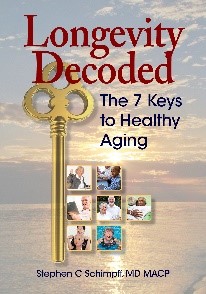
This may at first glance seem overwhelming. But you can address your risk step by step and have fun doing so. Remember that the 7 Keys to Healthy Aging not only reduce your risk for Alzheimer’s disease but are also very effective in preventing the development of many chronic diseases, such as cardiovascular disease, diabetes, and obesity, so start with these and pick one or two to address first. I would suggest diet and exercise, as they are likely the most important. But before you start anything discussed here, talk with your doctor to see if these suggestions are appropriate for your personal situation. And while there, discuss the items you need their help with — especially elevated blood pressure, blood sugar, LDL cholesterol, and excess weight. No matter your age, it is never too late to start.
Can this really prevent Alzheimer’s?
There are no guarantees. But following these suggestions will have a major impact on your risk of developing Alzheimer’s disease. It will also go a long way to preventing other chronic diseases like heart, lung, kidney disease, or cancer. That’s a very good return on your investment of time and energy.